I managed to get up on time on Thursday and feed and water the birds before settling down with my dirty cuppa. Instead of watching a video, though, I read a short story in a crime fiction anthology. Crimes Collide: Volume 1 was a Kickstarter rewards, and it features 10 short stories by Kristine Kathryn Rusch, and 10 by Dean Wesley Smith. the theme is ‘light and cosy’, so it fits really well with the first assignment in the 50 murder mystery prompts workshop.
Once at my desk, I watched Week 3 of the writing mystery classic workshop and was amazed to learn that I’ve had the definition of a professional sleuth wrong for all my writing life. I thought it was a police professional or a private investigator or a criminal lawyer or an autopsy surgeon. I didn’t realise it was a professional in the field against which the story is set, such as the main characters in the Dick Francis stories set in the horse racing world. Gosh, that opens things up a lot.
The next thing I did was to write out neatly 3 columns of 25 settings I feel confident writing in. I hit the magic 75 very quickly, then crossed out 2 and changed them for something else, such as ‘bake off’ for ‘evening class’ and ‘public baths’ for ‘living history event’. Some of them, like the local festivals, are very much Stevie Beck stories for her to cover in her role as community reporter. Others are obvious Marcie Craig settings. But the rest would suit any main character.
I found a random number generator and ran a few for fun. Here’s just one set I got:
- Main character
4: an amateur sleuth - Setting
32: a jamboree - Weather
3: icy - Victim
18: radio presenter - Weapon/method
32: lethal injection - Killer
7: Justice of the Peace - Motive
35: misunderstanding
Hmm, that number 32 came up once too often…
Amateur sleuth could be a brand-new protagonist, or it can be an existing one. I’ll see where this story goes before deciding to spin the wheel again. All of my series MCs are on the list as well, and often the other numbers will be way off what they’d normally appear with. But it’s a good way to come up with a quick idea and maybe work through if necessary.
Now, it’s highly unlikely that a jamboree will take place when it’s icy, unless it’s indoors. But my idea of a jamboree is a massive girl guide or boy scout camp, usually in the summer, usually with canvas tents. Or it might be the Boys/Girls Brigade. Or the Adventure Scouts. As these are all usually under canvas, I might roll that one again. Although the poet and I have been camping, in a tent, in a snowstorm. So anything is possible.
(I used to write for the Guide Association and I still have a current badge work book. That’s why the jamboree is on my list of settings. And I could have some of the guides working towards a badge or three. Or they could be on a treasure hunt.)
It’s very likely there might be a radio presenter there, either as an attendee or covering the event for the local radio station. The radio presenter is a keeper. S/he comes up a lot, but with my broadcasting background (why the radio presenter is on there), it’s something I can build in without too much research.
I’m not sure about a lethal injection, because that would suggest pre-meditation, to me. BUT…it could be a lethal insulin injection, which would make the perp a diabetic. I’ll keep that one for now as already it’s opened up a character’s character. But it’s something I’ll have to research.
A JP could be Brown Owl or Akela, or s/he could be a parent or guardian of one of the attendees, or s/he could be a guest speaker. The JP is a keeper.
Misunderstanding is an excellent and oft-used motive for murder, or attempted murder, or even an accident, such as a push or shove gone wrong. Misunderstanding is a keeper.
I’ve seen this kind of ideas generator a lot and I’ve used it myself a few times too, as well as for instant writing exercises where I ask someone for random places or people or things. But this is the first time I’ve started to write it all down in a permanent fashion. I use other ways to come up with ideas for short stories too, such as local legends, local events, topical anniversaries, the classic 7-step plot method, and so on.
I love the ideas creation part, a bit too much, actually, and I had to drag myself away from the notebooks and random number generator and get on with some work.
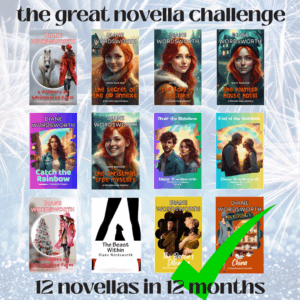
But I only got as far as planning the short cosy for the Sunday night deadline. It’s my next deadline, so it leapfrogged over the 12 stories in 12 months project (deadline next Wednesday) and the new novella (deadline at the end of the month). I wanted to replicate the Save the Cat beat sheet in Plottr, as the more I read and learn about writing, the more the Save the Cat system seems to make sense. (I already have a STC template in Scrivener.)
I keep replacing things in the cosy mystery outline with things in Save the Cat, and whenever we’re watching a film on the telly now, or a long-running drama series, we sit there, the two of us, identifying the beats. It’s like the penny’s slowly dropping, and if I can utilise it within Scrivener as well, that’s a powerful planning tool I’ve got.
Before I knew it, the poet was home from work again and the light was waning. So I called it a day.
Have a great weekend!






Brainstorming is such fun.
Have a great weekend!
You too!